
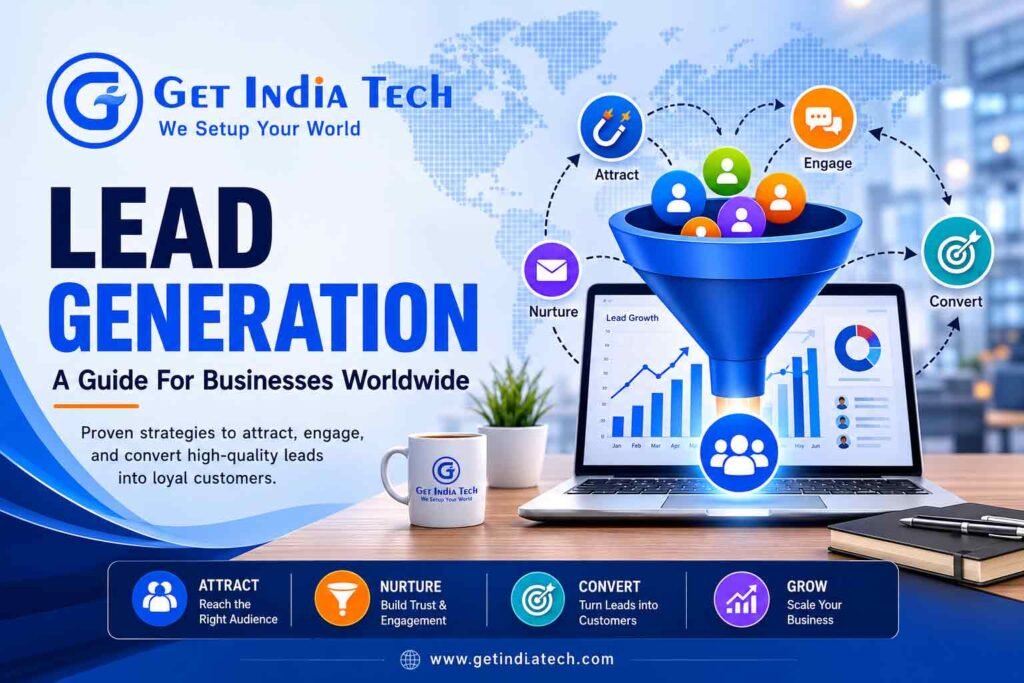
Generating a steady flow of high-quality leads is one of the biggest challenges for businesses today. Whether you run a startup, a local company, or a global enterprise, attracting the right audience and converting them into paying customers requires a well-planned lead generation strategy.
Modern consumers research products, compare services, read reviews, and interact with brands across multiple digital platforms before making a purchase decision. This shift means businesses must focus on building trust, delivering value, and creating personalized experiences throughout the customer journey.
Lead generation is more than collecting contact information. It is about attracting potential customers who are genuinely interested in your products or services and guiding them through the buying process with relevant content, effective communication, and strategic follow-ups.
Businesses that invest in professional websites, search engine optimization (SEO), content marketing, social media marketing, email campaigns, and paid advertising consistently generate better-quality leads and achieve higher conversion rates than those relying solely on traditional marketing methods.
At GetIndiaTech, we help businesses worldwide build high-performing websites, optimize their online presence, and implement result-driven digital marketing strategies that generate qualified leads and sustainable business growth. Whether you’re looking to increase inquiries, improve conversions, or expand into new markets, a strong lead generation system is the foundation of long-term success.
This comprehensive guide explains everything you need to know about lead generation—from understanding the basics to implementing advanced strategies that help your business attract, engage, and convert potential customers in today’s competitive digital landscape.
Table of Contents
1. What Is Lead Generation?
2. Why Lead Generation Matters
3. How the Lead Generation Process Works
4. Types of Business Leads
5. Understanding Your Target Audience
6. Building a High-Converting Website
7. Search Engine Optimization (SEO)
8. Content Marketing
9. Landing Pages
10. Call-to-Action (CTA)
11. Lead Magnets
12. Email Marketing
13. Social Media Marketing
14. Paid Advertising
15. Local Lead Generation
16. B2B Lead Generation
17. B2C Lead Generation
18. Lead Nurturing
19. CRM and Marketing Automation
20. Lead Scoring
21. Measuring Lead Generation Success
22. Common Lead Generation Mistakes
23. Future Trends
24. Frequently Asked Questions
25. Conclusion
Why Read This Guide?
By the end of this article, you will learn:
- What lead generation really means
- Why every business needs a lead generation strategy
- The complete customer acquisition journey
- How SEO helps generate qualified leads
- The best digital marketing channels
- How to improve website conversion rates
- Effective lead nurturing techniques
- Essential tools for automation
- Common mistakes to avoid
- Future trends shaping lead generation
- Actionable tips to grow your business globally
1. What Is Lead Generation?
Lead generation is the process of attracting potential customers (known as leads) and encouraging them to express interest in your products or services. A lead is anyone who shares their contact information—such as their name, email address, phone number, or business details—because they want to learn more about what your company offers.
In today’s digital world, customers rarely make instant purchasing decisions. Instead, they research online, compare competitors, read reviews, and evaluate multiple options before choosing a business. An effective lead generation strategy helps your business connect with these potential customers early in their buying journey.
Rather than waiting for customers to find you, lead generation enables you to proactively attract qualified prospects through valuable content, search engine optimization (SEO), social media, email marketing, paid advertising, and a high-performing website.
For example, if someone searches for “best web development company”, visits your website, reads your services, and submits a contact form requesting a quotation, that visitor becomes a lead.
Businesses worldwide rely on lead generation because it helps create a predictable sales pipeline, improves conversion rates, and supports long-term business growth.
Key Benefits of Lead Generation
- Attracts qualified prospects.
- Builds long-term customer relationships.
- Increases sales opportunities.
- Improves marketing return on investment (ROI).
- Supports sustainable business growth.
- Enhances brand awareness globally.
- Reduces customer acquisition costs over time.
What Makes a Good Lead?
Not every website visitor becomes a valuable lead. A good lead typically:
- Has a genuine interest in your products or services.
- Fits your ideal customer profile.
- Has the authority to make purchasing decisions.
- Has a specific problem your business can solve.
- Is ready to purchase now or in the near future.
Focusing on quality leads instead of quantity helps businesses improve sales efficiency and maximize revenue.
2. Why Lead Generation Matters
Every business needs customers to survive. Without a consistent flow of new customers, business growth becomes difficult. This is why lead generation plays such an important role in modern marketing.
Traditional advertising often targets a broad audience without knowing who is genuinely interested. Digital lead generation focuses on attracting people who are already searching for solutions, making marketing efforts more effective and cost-efficient.
Whether you operate a local business or serve international clients, a structured lead generation strategy allows you to reach potential customers at the right time with the right message.
Benefits of Lead Generation for Businesses
Generates Qualified Customers
Lead generation attracts people who are actively interested in your products or services, increasing the chances of conversion.
Improves Brand Awareness
Publishing valuable content, optimizing your website, and maintaining an active online presence help build credibility and trust among your target audience.
Supports Business Growth
A steady pipeline of qualified leads ensures consistent business opportunities and long-term revenue generation.
Increases Marketing ROI
Instead of spending money on broad advertising, businesses can focus on targeted campaigns that deliver measurable results.
Builds Customer Trust
Educational blogs, case studies, testimonials, and helpful resources establish your business as an industry expert.
Enables Better Sales Forecasting
With a predictable flow of leads, businesses can estimate future sales more accurately and allocate resources effectively.
Why Businesses Worldwide Need Lead Generation
Global competition has increased significantly over the past decade. Customers can compare dozens of companies within minutes. Businesses that invest in digital marketing and lead generation gain a competitive advantage by reaching prospects before their competitors do.
A professional website, strong SEO strategy, valuable content, and effective customer communication create a reliable system for attracting and converting leads from around the world.
3. How the Lead Generation Process Works
Lead generation is not a single activity. It is a structured process that guides potential customers from discovering your business to becoming loyal clients.
Understanding this process helps businesses optimize every stage of the customer journey.
Step 1: Attract Visitors
The first step is driving relevant traffic to your website.
Common traffic sources include:
- Search Engine Optimization (SEO)
- Google Search
- Social Media Marketing
- Content Marketing
- Paid Advertising
- Email Campaigns
- Referral Websites
- Business Directories
- Online Communities
The more relevant your traffic, the better your chances of generating qualified leads.
Step 2: Capture Lead Information
Once visitors arrive on your website, encourage them to take action.
Examples include:
- Contact Forms
- Quote Request Forms
- Newsletter Sign-ups
- Free Consultation Requests
- Downloadable Resources
- Live Chat
- WhatsApp Contact Button
- Appointment Booking Forms
Collect only essential information to improve conversion rates.
Step 3: Qualify Leads
Not every lead is ready to purchase immediately.
Businesses should evaluate leads based on:
- Budget
- Business Needs
- Purchase Timeline
- Industry
- Company Size
- Geographic Location
- Decision-Making Authority
Lead qualification helps sales teams focus on the most valuable opportunities.
Step 4: Nurture Leads
Many leads require additional information before making a buying decision.
Lead nurturing may include:
- Educational Emails
- Product Demonstrations
- Blog Articles
- Case Studies
- Customer Testimonials
- Webinar Invitations
- Personalized Follow-ups
Consistent communication builds trust and increases conversion rates.
Step 5: Convert Into Customers
After sufficient engagement, the lead becomes ready to purchase.
An effective sales process should provide:
- Transparent Pricing
- Professional Proposals
- Fast Communication
- Secure Payment Options
- Excellent Customer Support
A positive buying experience increases customer satisfaction and encourages repeat business.
4. Types of Business Leads
Understanding different types of leads helps businesses prioritize marketing and sales efforts.
Information Qualified Lead (IQL)
An IQL is interested in learning more about your business but is not yet considering a purchase.
Examples:
- Reading blog posts.
- Watching educational videos.
- Downloading guides.
Goal:
Educate and build trust.
Marketing Qualified Lead (MQL)
An MQL has interacted with your marketing content and shown stronger interest.
Examples:
- Downloading an eBook.
- Registering for a webinar.
- Subscribing to your newsletter.
- Requesting additional information.
Goal:
Continue nurturing through valuable content.
Sales Qualified Lead (SQL)
An SQL has demonstrated clear buying intent.
Examples:
- Requesting a quotation.
- Booking a consultation.
- Asking for pricing.
- Contacting the sales team.
Goal:
Move directly into the sales process.
Product Qualified Lead (PQL)
Common in SaaS businesses.
The user has already experienced the product through:
- Free Trial
- Freemium Plan
- Demo Account
Goal:
Convert them into paying customers.
Service Qualified Lead
A customer who expresses interest after using one of your existing services.
Example:
A website development client later requests SEO or digital marketing services.
Goal:
Upsell additional services.
5. Understanding Your Target Audience
One of the biggest mistakes businesses make is trying to market to everyone.
Successful lead generation begins with understanding exactly who your ideal customers are.
The better you understand your audience, the more effective your marketing campaigns become.
Identify Customer Pain Points
Ask yourself:
- What problems do customers face?
- What solutions are they searching for?
- Why would they choose your business?
- What challenges can you solve better than competitors?
Addressing these questions helps create more relevant content and offers.
Create Customer Personas
A customer persona is a detailed profile of your ideal customer.
Include factors such as:
- Age
- Location
- Industry
- Job Role
- Business Size
- Goals
- Challenges
- Buying Behavior
- Preferred Communication Channels
Customer personas enable businesses to create highly targeted marketing campaigns.
Understand Search Intent
People search online with different intentions.
Common search intents include:
- Informational
- Navigational
- Commercial Investigation
- Transactional
Creating content that matches search intent improves SEO performance and increases lead quality.
Research Your Competitors
Analyze competitors to discover:
- Their strengths
- Content strategy
- SEO performance
- Marketing channels
- Customer engagement
- Unique selling points
Competitive research helps identify opportunities to differentiate your business.
Continuously Analyze Customer Data
Use analytics tools to monitor:
- Website traffic
- User behavior
- Conversion rates
- Bounce rate
- Session duration
- Popular landing pages
Data-driven decisions improve marketing performance and maximize lead generation success.
6. Building a High-Converting Website
Your website is the foundation of your lead generation strategy. No matter how much traffic you generate through SEO, social media, or paid advertising, visitors will leave if your website is slow, difficult to navigate, or lacks trust. A professionally designed website creates a positive first impression and encourages visitors to take action.
A high-converting website focuses on user experience, clear messaging, fast performance, and persuasive calls to action. Every page should guide visitors toward a specific goal, such as requesting a quote, scheduling a consultation, or contacting your business.
Why Your Website Matters for Lead Generation
Your website is available 24/7, allowing potential customers from around the world to learn about your services at any time. A well-optimized website helps build credibility, showcase your expertise, and convert visitors into qualified leads.
Benefits include:
- Creates a strong first impression
- Builds trust and credibility
- Improves search engine rankings
- Increases lead conversions
- Enhances user experience
- Supports business growth
Essential Elements of a High-Converting Website
Clear Value Proposition
Visitors should immediately understand:
- What your business offers
- Who your services are for
- Why they should choose your company
- What makes you different from competitors
Keep your headline simple, compelling, and customer-focused.
Professional Design
A clean and modern design improves user engagement.
Best practices:
- Consistent branding
- Easy-to-read typography
- Professional color palette
- High-quality images
- Plenty of white space
- Mobile-friendly layout
Fast Loading Speed
Website speed directly impacts user experience and SEO.
Improve performance by:
- Compressing images
- Using browser caching
- Choosing reliable hosting
- Minimizing CSS and JavaScript files
- Enabling lazy loading
- Using a Content Delivery Network (CDN)
Even a one-second delay can reduce conversions.
Mobile Responsiveness
Most users browse websites on smartphones and tablets. A responsive website automatically adapts to different screen sizes, ensuring a seamless experience across all devices.
Simple Navigation
Visitors should find information quickly.
Include clear navigation links such as:
Avoid cluttered menus and unnecessary pages.
Trust Signals
People prefer businesses they trust.
Include:
- Client testimonials
- Google reviews
- Case studies
- Awards and certifications
- Security badges (SSL)
- Company information
- Contact details
These elements increase confidence and encourage inquiries.
Strong Contact Options
Make it easy for visitors to reach you.
Offer multiple contact methods:
- Contact form
- Phone number
- Email address
- WhatsApp chat
- Live chat
- Appointment booking
The fewer barriers, the higher the conversion rate.
Website Optimization Checklist
✔ Fast loading speed
✔ Mobile responsive
✔ SSL certificate
✔ Easy navigation
✔ Professional branding
✔ Contact forms
✔ Clear CTAs
✔ SEO-friendly URLs
✔ Optimized images
✔ Internal linking
7. Search Engine Optimization (SEO)
Search Engine Optimization (SEO) is one of the most effective long-term lead generation strategies. SEO helps your website appear in search engine results when potential customers look for products or services related to your business.
Unlike paid advertising, organic SEO continues to generate leads over time without paying for every click.
Why SEO Is Important
When your website ranks on the first page of search results, more people discover your business naturally. Higher rankings increase visibility, website traffic, and qualified leads.
SEO also builds credibility because users tend to trust websites that rank organically.
Keyword Research
Successful SEO begins with keyword research.
Identify keywords your target audience searches for, such as:
- Lead Generation Services
- Website Development Company
- SEO Services
- Digital Marketing Agency
- Business Website Design
- Lead Generation Strategy
- Online Marketing Services
Focus on keywords with strong search intent rather than simply high search volume.
On-Page SEO
Optimize every page using best practices:
Title Tag
Include your primary keyword near the beginning of the title.
Example:
Lead Generation Services for Businesses Worldwide | GetIndiaTech
Meta Description
Write an engaging description encouraging users to click.
Keep it around 150–160 characters.
Headings
Use structured headings:
- H1
- H2
- H3
- H4
Avoid skipping heading levels.
URL Structure
Use clean URLs.
Good Example:
/lead-generation-services/
Avoid long URLs with unnecessary numbers or symbols.
Image Optimization
Optimize every image by:
- Compressing file size
- Adding descriptive filenames
- Writing keyword-rich ALT text
This improves accessibility and image search visibility.
Internal Linking
Connect related pages within your website.
Examples:
Internal links improve user engagement and SEO performance.
External Linking
Reference trusted sources when appropriate.
Examples:
External links increase content credibility.
Technical SEO
Technical SEO improves website performance.
Key factors include:
- HTTPS Security
- XML Sitemap
- Robots.txt
- Structured Data
- Canonical URLs
- Mobile Optimization
- Core Web Vitals
- Fast Page Speed
Local SEO
If you serve local customers:
- Optimize Google Business Profile
- Collect customer reviews
- Add business location
- Use local keywords
- Maintain NAP consistency
Local SEO increases visibility in nearby searches.
8. Content Marketing
Content marketing is one of the most powerful ways to attract potential customers. Instead of directly promoting your services, you provide valuable information that educates, informs, and solves problems.
Helpful content builds trust, establishes authority, and encourages visitors to engage with your business.
Types of Content That Generate Leads
Create different content formats, including:
- Blog Posts
- Case Studies
- Industry Guides
- White Papers
- eBooks
- Videos
- Infographics
- FAQs
- Checklists
- Tutorials
A diverse content strategy reaches audiences with different preferences.
Benefits of Content Marketing
- Improves SEO rankings
- Builds trust
- Increases website traffic
- Educates customers
- Generates backlinks
- Supports email marketing
- Enhances brand authority
- Produces long-term results
Writing High-Quality Content
Focus on creating content that is:
- Original
- Helpful
- Well-structured
- Easy to read
- SEO optimized
- Up-to-date
- Actionable
Avoid keyword stuffing and prioritize user value.
Content Promotion
Publishing content is only the first step.
Promote it through:
- Social media
- Email newsletters
- Industry communities
- Guest blogging
Promotion increases visibility and attracts more qualified visitors.
9. Landing Pages
A landing page is a dedicated webpage designed for a single marketing objective. Unlike a homepage, it removes distractions and focuses on one specific action.
Landing pages often achieve higher conversion rates because they present a clear offer and guide visitors toward completing a form or making an inquiry.
Characteristics of an Effective Landing Page
A successful landing page includes:
- Compelling headline
- Clear benefits
- Professional visuals
- Short description
- Strong CTA
- Lead capture form
- Testimonials
- Trust badges
Every element should encourage visitors to convert.
Landing Page Best Practices
Keep It Simple
Avoid unnecessary navigation menus and excessive content.
Focus on Benefits
Explain how your service solves customer problems.
Use Social Proof
Display testimonials, reviews, and client logos.
Optimize Forms
Request only essential information.
Shorter forms generally produce higher conversion rates.
Improve Speed
Fast-loading landing pages reduce abandonment rates.
Common Landing Page Mistakes
Avoid:
- Weak headlines
- Poor design
- Slow loading
- Too much text
- Multiple CTAs
- Long forms
- Missing trust signals
10. Call-to-Action (CTA)
A Call-to-Action (CTA) tells visitors exactly what they should do next. Without a clear CTA, many users leave your website without taking action.
Strong CTAs improve engagement and significantly increase lead generation.
Examples of Effective CTAs
- Get a Free Quote
- Book a Free Consultation
- Contact Our Experts
- Request a Demo
- Download the Guide
- Start Your Project
- Talk to Our Team
- Get Started Today
Use action-oriented language that creates urgency and communicates value.
CTA Placement
Place CTAs strategically throughout your website:
- Hero section
- Service pages
- Blog posts
- Sidebar
- Footer
- Landing pages
- Contact section
Visitors should never struggle to find the next step.
CTA Design Tips
A high-performing CTA should:
- Stand out visually
- Use contrasting colors
- Include concise text
- Be easy to click on mobile devices
- Clearly explain the benefit
Avoid vague buttons like “Click Here.”
Measuring CTA Performance
Monitor metrics such as:
- Click-through rate (CTR)
- Conversion rate
- Bounce rate
- Form submissions
- User engagement
- Heatmaps
Regular testing and optimization improve CTA effectiveness over time.
11. Lead Magnets
A lead magnet is a valuable resource or incentive offered to potential customers in exchange for their contact information. It is one of the most effective ways to build an email list and generate qualified leads. Instead of asking visitors to fill out a form without any benefit, businesses provide something useful that solves a problem or answers a question.
A successful lead magnet should be relevant to your target audience, easy to access, and immediately valuable. The more helpful it is, the higher your conversion rate will be.
Why Lead Magnets Are Important
Lead magnets encourage visitors to engage with your business by offering value before asking for a commitment. This approach builds trust and increases the likelihood that prospects will move further along the sales funnel.
Benefits of Lead Magnets
- Increase website conversions
- Build an email subscriber list
- Generate high-quality leads
- Establish authority in your industry
- Improve customer trust
- Support long-term lead nurturing
Popular Types of Lead Magnets
Choose lead magnets based on your audience and business goals.
Free eBooks
Offer in-depth guides that solve a specific problem.
Example:
- Complete Website Development Guide
- Beginner’s SEO Handbook
- Digital Marketing Strategy Guide
Checklists
People appreciate simple, actionable resources.
Examples:
- SEO Checklist
- Website Launch Checklist
- Social Media Marketing Checklist
Templates
Templates save time and are highly valuable.
Examples:
- Business Proposal Template
- Website Planning Template
- Marketing Calendar Template
Free Consultation
Many service-based businesses generate leads by offering a free consultation.
Potential customers receive expert advice before making a purchasing decision.
Free Website Audit
A website audit identifies:
- SEO issues
- Speed problems
- User experience improvements
- Security concerns
This is an excellent lead magnet for web development and digital marketing agencies.
Free Trial or Demo
Software companies often provide limited access to their products, allowing users to experience the benefits before purchasing.
Best Practices for Creating Lead Magnets
- Solve one specific problem
- Keep the content high quality
- Deliver it instantly
- Use a professional design
- Include a clear call-to-action
- Promote it across multiple channels
12. Email Marketing
Email marketing remains one of the most effective channels for nurturing leads and converting prospects into customers. It allows businesses to maintain regular communication, share valuable information, and build long-term relationships.
Unlike social media, where algorithms control visibility, email gives you direct access to your audience.
Benefits of Email Marketing
A well-planned email strategy can:
- Build customer trust
- Increase engagement
- Generate repeat business
- Promote new products or services
- Recover abandoned leads
- Improve customer retention
- Increase sales conversions
Building an Email List
Avoid purchasing email lists. Instead, grow your audience organically using:
- Lead magnets
- Newsletter subscriptions
- Contact forms
- Webinar registrations
- Event sign-ups
- Free downloads
An engaged email list produces better results than a large, unqualified list.
Types of Marketing Emails
Welcome Emails
Introduce your company and set expectations for future communication.
Educational Emails
Share blog articles, industry insights, and helpful resources.
Promotional Emails
Highlight special offers, discounts, or new services.
Follow-Up Emails
Reconnect with prospects who requested information but have not yet converted.
Customer Retention Emails
Stay connected with existing customers through updates, tips, and exclusive offers.
Email Marketing Best Practices
- Personalize email content
- Write compelling subject lines
- Keep messages concise
- Include a clear CTA
- Optimize for mobile devices
- Test different email variations
- Monitor open and click-through rates
13. Social Media Marketing
Social media platforms provide businesses with opportunities to connect directly with their target audience. Consistent engagement helps build brand awareness, generate leads, and strengthen customer relationships.
Instead of focusing solely on promotional content, businesses should educate, inspire, and engage their followers.
Benefits of Social Media Marketing
- Increase brand visibility
- Drive website traffic
- Generate qualified leads
- Build customer trust
- Encourage customer engagement
- Improve brand loyalty
Best Platforms for Lead Generation
Ideal for:
- B2B businesses
- Professional services
- Corporate networking
- Recruitment
Suitable for:
- Local businesses
- Community engagement
- Paid advertising
- Brand awareness
Best for:
- Visual storytelling
- Product showcases
- Lifestyle brands
- Creative businesses
YouTube
Excellent for:
- Tutorials
- Product demonstrations
- Educational content
- Customer testimonials
X (formerly Twitter)
Useful for:
- Industry updates
- Customer engagement
- News sharing
- Brand communication
Content Ideas
Maintain variety by publishing:
- Educational posts
- Success stories
- Client testimonials
- Behind-the-scenes content
- Industry news
- Infographics
- Videos
- FAQs
Social Media Tips
- Post consistently
- Respond quickly to comments
- Use high-quality visuals
- Include relevant hashtags
- Monitor analytics
- Encourage audience interaction
14. Paid Advertising
Paid advertising enables businesses to generate leads quickly by targeting specific audiences based on demographics, interests, and online behavior.
While SEO provides long-term growth, paid advertising delivers faster visibility.
Popular Paid Advertising Platforms
Google Ads
Reach users actively searching for products or services.
Best for:
- High-intent leads
- Local services
- Professional businesses
Facebook Ads
Ideal for:
- Brand awareness
- Lead generation campaigns
- Retargeting
- Audience expansion
LinkedIn Ads
Perfect for B2B lead generation.
Target users by:
- Job title
- Industry
- Company size
- Skills
Instagram Ads
Highly effective for visually appealing products and services.
Benefits of Paid Advertising
- Immediate visibility
- Highly targeted audience
- Flexible budgets
- Measurable performance
- Fast lead generation
- Scalable campaigns
Paid Advertising Best Practices
- Define campaign objectives
- Target the right audience
- Write compelling ad copy
- Use attractive visuals
- Optimize landing pages
- Monitor campaign performance
- Continuously improve based on data
Common Advertising Mistakes
Avoid:
- Poor audience targeting
- Weak landing pages
- Unclear CTAs
- Ignoring analytics
- Setting unrealistic budgets
- Running campaigns without testing
15. Local Lead Generation
Even businesses serving international markets benefit from strong local visibility. Local lead generation focuses on attracting nearby customers through search engines, maps, and community engagement.
Optimize Google Business Profile
A complete profile should include:
- Business name
- Address
- Phone number
- Website
- Business hours
- Photos
- Customer reviews
Accurate information increases local search visibility.
Encourage Customer Reviews
Positive reviews improve trust and influence purchasing decisions.
Ask satisfied customers to leave honest feedback after completing a project.
Create Location-Based Content
Publish articles related to:
- Local services
- Community events
- Regional industry trends
- Area-specific customer success stories
This helps improve rankings for location-based searches.
Build Local Citations
List your business consistently across trusted directories.
Ensure your business name, address, and phone number remain identical on every platform.
Participate in the Local Community
Increase visibility by:
- Sponsoring events
- Joining business organizations
- Attending networking events
- Partnering with local businesses
Strong community involvement supports both online and offline lead generation.
16. B2B Lead Generation
Business-to-Business (B2B) lead generation focuses on attracting companies, organizations, and decision-makers who are looking for products or services that help them achieve their business goals. Unlike B2C, B2B purchasing decisions often involve multiple stakeholders, longer sales cycles, and more detailed evaluations.
Successful B2B lead generation requires building trust, demonstrating expertise, and providing valuable information that helps businesses make informed decisions.
Why B2B Lead Generation Matters
B2B businesses depend on a steady flow of qualified leads to maintain revenue growth. Since business purchases often involve higher budgets and longer decision-making processes, generating high-quality leads is more important than simply increasing website traffic.
Key Benefits
- Generates qualified business inquiries
- Builds long-term client relationships
- Increases sales opportunities
- Improves return on investment (ROI)
- Supports predictable revenue growth
Effective B2B Lead Generation Strategies
Search Engine Optimization (SEO)
Optimize your website for industry-specific keywords that decision-makers search for.
Examples include:
- B2B Web Development Services
- Enterprise Software Development
- Business Website Design
- Professional SEO Services
LinkedIn Marketing
LinkedIn is one of the most effective platforms for B2B lead generation.
Use LinkedIn to:
- Share industry insights
- Publish thought leadership articles
- Connect with decision-makers
- Promote case studies
- Generate business inquiries
Content Marketing
Create valuable resources such as:
- Whitepapers
- Industry reports
- Case studies
- Technical guides
- Research articles
- Webinars
Educational content positions your business as an industry expert.
Email Outreach
Personalized email campaigns can help build relationships with potential clients. Focus on providing value rather than immediately promoting your services.
Website Optimization
A B2B website should include:
- Clear service pages
- Client success stories
- Portfolio
- Testimonials
- Contact forms
- Consultation booking
- Professional branding
17. B2C Lead Generation
Business-to-Consumer (B2C) lead generation focuses on attracting individual customers. Purchasing decisions in B2C markets are generally faster and often influenced by emotions, convenience, pricing, and customer experience.
Businesses must create engaging experiences that encourage users to take immediate action.
Characteristics of B2C Lead Generation
B2C marketing typically involves:
- Shorter sales cycles
- Higher purchase volume
- Emotional decision-making
- Personalized experiences
- Mobile-first interactions
Effective B2C Strategies
Social Media Marketing
Platforms such as Facebook, Instagram, TikTok, and YouTube help businesses reach large audiences.
Share:
- Product showcases
- Customer stories
- Educational videos
- Promotions
- Interactive content
Influencer Marketing
Partnering with trusted influencers increases brand awareness and credibility among targeted audiences.
Paid Advertising
Run targeted campaigns using:
- Google Ads
- Facebook Ads
- Instagram Ads
- YouTube Ads
Segment audiences based on demographics, interests, and purchasing behavior.
Email Campaigns
Keep customers engaged by sending:
- Exclusive offers
- Product updates
- Seasonal promotions
- Personalized recommendations
Customer Reviews
Positive reviews significantly influence purchasing decisions.
Encourage satisfied customers to share honest feedback on trusted review platforms.
18. Lead Nurturing
Not every lead is ready to become a customer immediately. Lead nurturing is the process of building relationships with potential customers until they are ready to make a purchasing decision.
The goal is to provide consistent value, answer questions, and build trust over time.
Why Lead Nurturing Is Important
Without proper follow-up, many qualified leads may lose interest or choose a competitor.
Lead nurturing helps businesses:
- Increase conversions
- Build customer confidence
- Shorten sales cycles
- Improve customer relationships
- Increase lifetime customer value
Effective Lead Nurturing Strategies
Personalized Communication
Address customers by name and provide information relevant to their needs.
Educational Content
Share:
- Blog articles
- Tutorials
- Case studies
- Videos
- Industry insights
Educational content keeps your business top-of-mind.
Follow-Up Emails
Send timely follow-up emails after:
- Quote requests
- Consultations
- Website inquiries
- Webinar registrations
Retargeting Campaigns
Display targeted advertisements to users who previously visited your website but did not convert.
Customer Support
Quick responses and helpful support improve trust and encourage purchasing decisions.
Signs a Lead Is Ready to Buy
Potential indicators include:
- Requests pricing information
- Books a consultation
- Downloads multiple resources
- Visits service pages repeatedly
- Replies to marketing emails
- Engages with sales representatives
19. CRM and Marketing Automation
Customer Relationship Management (CRM) software helps businesses organize customer information, manage sales pipelines, and improve communication.
Marketing automation complements CRM by automatically performing repetitive tasks such as email campaigns, follow-ups, and lead scoring.
Benefits of CRM
A CRM system allows businesses to:
- Track customer interactions
- Store lead information
- Monitor sales opportunities
- Improve collaboration
- Increase productivity
- Enhance customer service
Marketing Automation Benefits
Automation saves time while improving consistency.
Examples include:
- Welcome emails
- Lead nurturing campaigns
- Appointment reminders
- Follow-up messages
- Newsletter delivery
- Customer segmentation
Features to Look for in a CRM
Choose software that includes:
- Contact management
- Sales pipeline tracking
- Email integration
- Reporting dashboards
- Automation tools
- Mobile accessibility
- Analytics
Popular CRM Solutions
Some widely used CRM platforms include:
- HubSpot CRM
- Salesforce
- Zoho CRM
- Pipedrive
- Microsoft Dynamics 365
Select a solution that aligns with your business size and objectives.
20. Lead Scoring
Lead scoring is a method of ranking leads based on their likelihood of becoming customers. It helps sales teams prioritize prospects who are most likely to convert.
Instead of treating every lead equally, businesses focus their efforts on high-value opportunities.
Why Lead Scoring Matters
Lead scoring helps businesses:
- Improve sales efficiency
- Increase conversion rates
- Prioritize qualified prospects
- Reduce wasted time
- Improve collaboration between marketing and sales
Common Lead Scoring Factors
Businesses often assign scores based on:
Demographics
- Job title
- Industry
- Company size
- Geographic location
Website Behavior
- Number of website visits
- Time spent on pages
- Downloads
- Contact form submissions
- Pricing page visits
Email Engagement
- Opens emails
- Clicks links
- Replies to campaigns
- Downloads resources
Purchase Intent
High-intent actions include:
- Booking a consultation
- Requesting a proposal
- Asking for pricing
- Scheduling a demo
These behaviors typically indicate strong buying intent.
How Lead Scoring Improves Sales
Sales teams can focus on:
- High-priority leads
- Faster response times
- Better customer experiences
- Higher conversion rates
- More efficient sales processes
Lead scoring ensures valuable opportunities receive immediate attention.
Best Practices for Successful Lead Generation
Regardless of your business type, follow these proven best practices:
- Understand your target audience.
- Invest in a professional website.
- Publish valuable, SEO-optimized content.
- Optimize every landing page.
- Use compelling calls-to-action.
- Offer valuable lead magnets.
- Build and nurture an email list.
- Stay active on relevant social media platforms.
- Track key performance metrics.
- Continuously test and improve your campaigns.
Consistent optimization is the key to long-term lead generation success.
21. Measuring Lead Generation Success
Creating a lead generation strategy is only the beginning. To achieve sustainable growth, businesses must regularly measure performance, analyze data, and optimize campaigns based on real results. Tracking the right metrics helps you understand which marketing channels generate the highest-quality leads and deliver the best return on investment (ROI).
By reviewing your performance consistently, you can identify opportunities for improvement and make informed decisions that increase conversions.
Key Lead Generation Metrics
Website Traffic
Monitor how many visitors arrive on your website and identify the sources of that traffic.
Traffic sources include:
- Organic Search
- Direct Visits
- Social Media
- Paid Advertising
- Referral Websites
- Email Marketing
Understanding traffic sources helps you invest in the channels that produce the best results.
Conversion Rate
Conversion rate measures the percentage of visitors who complete a desired action, such as:
- Filling out a contact form
- Booking a consultation
- Downloading a guide
- Requesting a quotation
- Signing up for a newsletter
Improving your conversion rate often delivers greater results than simply increasing website traffic.
Cost Per Lead (CPL)
Cost Per Lead indicates how much you spend to acquire one qualified lead. Keeping this cost under control improves overall marketing profitability.
Customer Acquisition Cost (CAC)
This metric measures the total cost of acquiring a new customer, including advertising, marketing, and sales expenses.
Lead-to-Customer Conversion Rate
Track how many qualified leads become paying customers. A higher conversion rate usually indicates an effective sales process and strong lead quality.
Return on Investment (ROI)
Measure the revenue generated compared to your marketing investment.
A positive ROI confirms that your lead generation strategy is contributing to business growth.
22. Common Lead Generation Mistakes
Many businesses invest in digital marketing but fail to generate quality leads because they overlook fundamental best practices. Avoiding these common mistakes can significantly improve your results.
Ignoring Target Audience Research
Marketing without understanding your audience often attracts unqualified visitors. Research customer needs, pain points, and buying behavior before launching campaigns.
Poor Website User Experience
A slow, outdated, or confusing website discourages visitors from taking action.
Improve your website by focusing on:
- Fast loading speed
- Mobile responsiveness
- Clear navigation
- Simple contact forms
- Professional design
Weak Calls-to-Action
Visitors need clear instructions on what to do next.
Replace generic buttons like “Submit” with action-oriented CTAs such as:
- Get a Free Quote
- Book a Consultation
- Start Your Project
- Contact Our Team
Not Following Up with Leads
Many businesses lose potential customers because they fail to respond quickly.
Timely follow-ups increase trust and improve conversion rates.
Publishing Low-Quality Content
Thin, outdated, or duplicate content reduces credibility and negatively impacts SEO.
Focus on creating original, valuable, and informative content that answers customer questions.
Ignoring SEO
Without proper SEO, potential customers may never discover your website through search engines.
Optimize:
- Titles
- Meta descriptions
- Headings
- Keywords
- Images
- Internal links
- Technical performance
Not Tracking Performance
Without analytics, it’s impossible to know which marketing strategies are working.
Use data to guide future improvements.
23. Future Trends in Lead Generation
Digital marketing continues to evolve rapidly. Businesses that stay ahead of emerging trends will gain a competitive advantage and generate higher-quality leads.
Artificial Intelligence (AI)
AI-powered tools help businesses:
- Personalize customer experiences
- Automate communication
- Predict customer behavior
- Improve lead qualification
Voice Search Optimization
As voice assistants become more popular, businesses should optimize content for conversational search queries.
Video Marketing
Video continues to be one of the most engaging content formats.
Consider creating:
- Product demonstrations
- Customer testimonials
- Educational tutorials
- Company introductions
Interactive Content
Interactive experiences increase engagement.
Examples include:
- Calculators
- Quizzes
- Assessments
- Surveys
- Interactive infographics
Personalization
Customers expect personalized experiences.
Use customer data to deliver relevant recommendations, emails, and content.
Marketing Automation
Automation will continue helping businesses improve efficiency through:
- Email workflows
- CRM integration
- Lead nurturing
- Customer segmentation
Privacy and Data Protection
Businesses must collect customer information responsibly and comply with applicable privacy regulations.
Transparent communication builds customer trust.
24. Frequently Asked Questions (FAQs)
1. What is lead generation?
Lead generation is the process of attracting potential customers and collecting their contact information to convert them into paying customers.
2. Why is lead generation important?
It helps businesses generate qualified prospects, increase sales opportunities, and achieve sustainable business growth.
3. Which businesses need lead generation?
Almost every business—including startups, small businesses, enterprises, eCommerce stores, agencies, healthcare providers, educational institutions, and service-based companies—can benefit from lead generation.
4. What is the difference between lead generation and sales?
Lead generation focuses on attracting potential customers, while sales focuses on converting qualified leads into paying customers.
5. Is SEO effective for lead generation?
Yes. SEO helps businesses attract highly targeted organic traffic from people actively searching for relevant products or services.
6. How long does SEO take to generate leads?
SEO is a long-term strategy. Many businesses begin seeing meaningful improvements within a few months, although timelines vary depending on competition, website quality, and content.
7. What is a qualified lead?
A qualified lead is someone who matches your target audience and has shown genuine interest in your products or services.
8. Which marketing channel generates the best leads?
There is no single answer. SEO, content marketing, email marketing, social media, and paid advertising can all generate excellent leads when used strategically.
9. What is a landing page?
A landing page is a focused webpage designed to encourage visitors to complete one specific action, such as filling out a form or requesting a quote.
10. What is lead nurturing?
Lead nurturing is the process of building relationships with potential customers through valuable communication until they are ready to make a purchase.
11. How can a website improve lead generation?
A professional, fast, mobile-friendly, and SEO-optimized website encourages visitors to engage and convert.
12. What tools help manage leads?
CRM systems, email marketing platforms, marketing automation software, and analytics tools help businesses organize and manage leads efficiently.
13. What is lead scoring?
Lead scoring ranks potential customers based on their likelihood of converting, helping sales teams prioritize high-value opportunities.
14. How often should I review my lead generation strategy?
Review key metrics regularly—such as monthly or quarterly—to identify trends, improve campaigns, and adapt to changing customer behavior.
15. Can small businesses benefit from lead generation?
Absolutely. A well-planned lead generation strategy helps businesses of all sizes attract more customers, build stronger relationships, and grow consistently.
Conclusion
Lead generation is more than simply collecting contact details—it is about building meaningful relationships with people who genuinely need your products or services. By combining a professional website, search engine optimization, valuable content, email marketing, social media engagement, and ongoing performance analysis, businesses can create a reliable system for attracting and converting qualified leads.
The most successful businesses continuously test, refine, and improve their lead generation strategies based on customer feedback and measurable results. Consistency, value, and trust are the foundations of long-term success.
Whether you are a startup, a growing business, or an established enterprise, investing in a structured lead generation strategy can help you expand your reach, improve conversion rates, and achieve sustainable business growth in today’s competitive digital landscape.
Why Choose GetIndiaTech?
At GetIndiaTech, we help businesses worldwide build high-performance digital solutions that drive measurable results. Our experienced team focuses on creating websites and marketing strategies that not only attract visitors but also convert them into loyal customers.
Our services include:
- Custom Website Design & Development
- WordPress Development
- eCommerce Website Development
- UI/UX Design
- Search Engine Optimization (SEO)
- Digital Marketing
- Social Media Marketing
- Web Application Development
- Mobile App Development
- Website Maintenance & Support
Whether you need a new website, better search rankings, or a complete digital marketing strategy, our team is ready to help your business grow.
Ready to Generate More Leads?
If you’re looking to attract more qualified customers and grow your business online, GetIndiaTech can help. We create modern, SEO-friendly websites and result-driven digital marketing strategies tailored to your business goals.
Contact us today to discuss your project and discover how we can help your business generate more leads, increase conversions, and achieve long-term success.